Catching a PLC Intermittent Fault with a Trend in the Controller: the Tags, the Rate, and the Latch That Keeps the Data
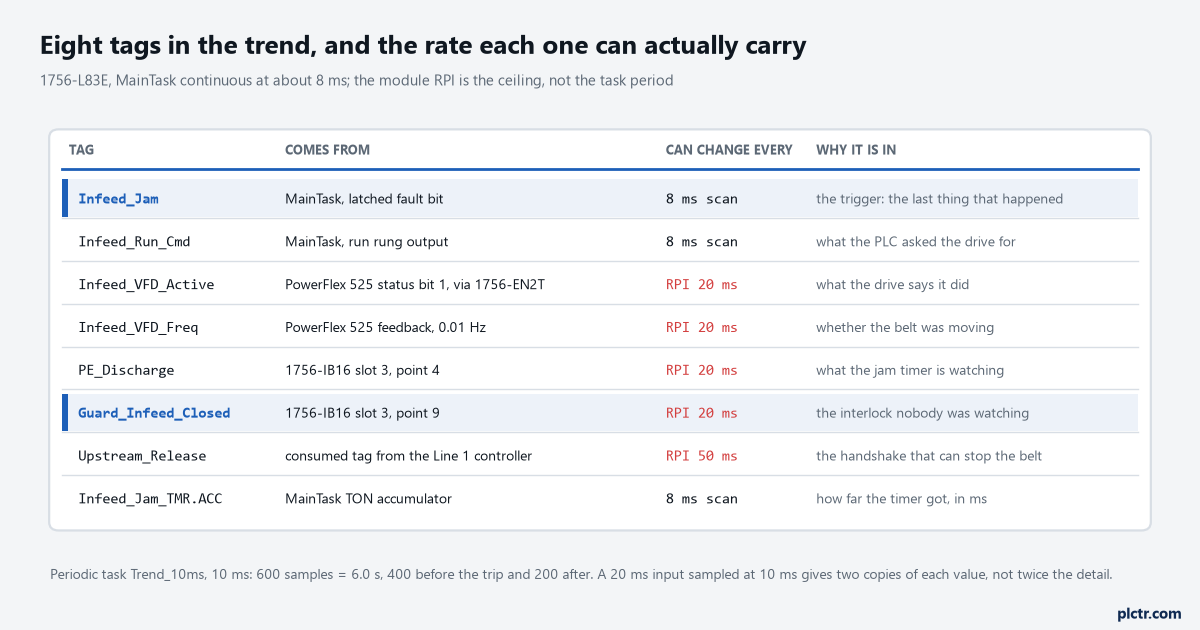
Eight tags in the PLC intermittent fault trend with where each comes from, how often it can change, and why it is in

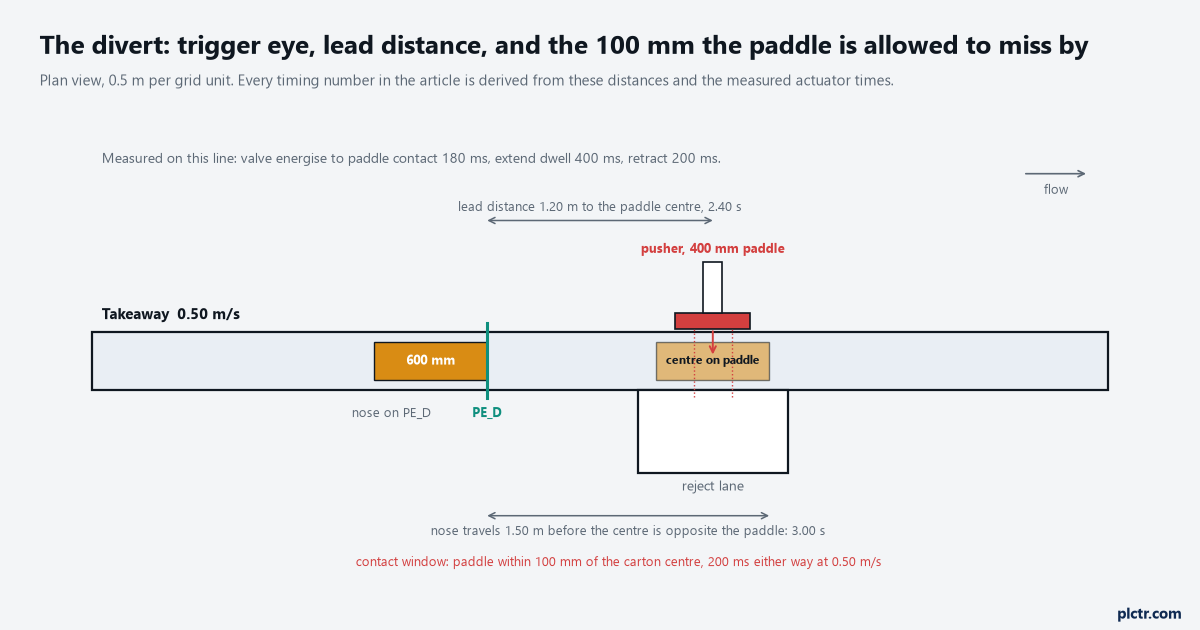
Line 2’s palletiser infeed stops about once a shift with Infeed_Jam latched, the alarm log says “Infeed jam” with a time, and the 1756-L83E, the PowerFlex 525 and the 1756-IB16 feeding the discharge photo-eye all check out every time somebody looks. Whatever happens takes a few tens of milliseconds and happens hours apart, and the … Read more
Cross-Fault Detection Between Two Safety Channels: What a Short Between the Wires Looks Like to the Controller

plc programming cross fault detection two safety channels 1 plc

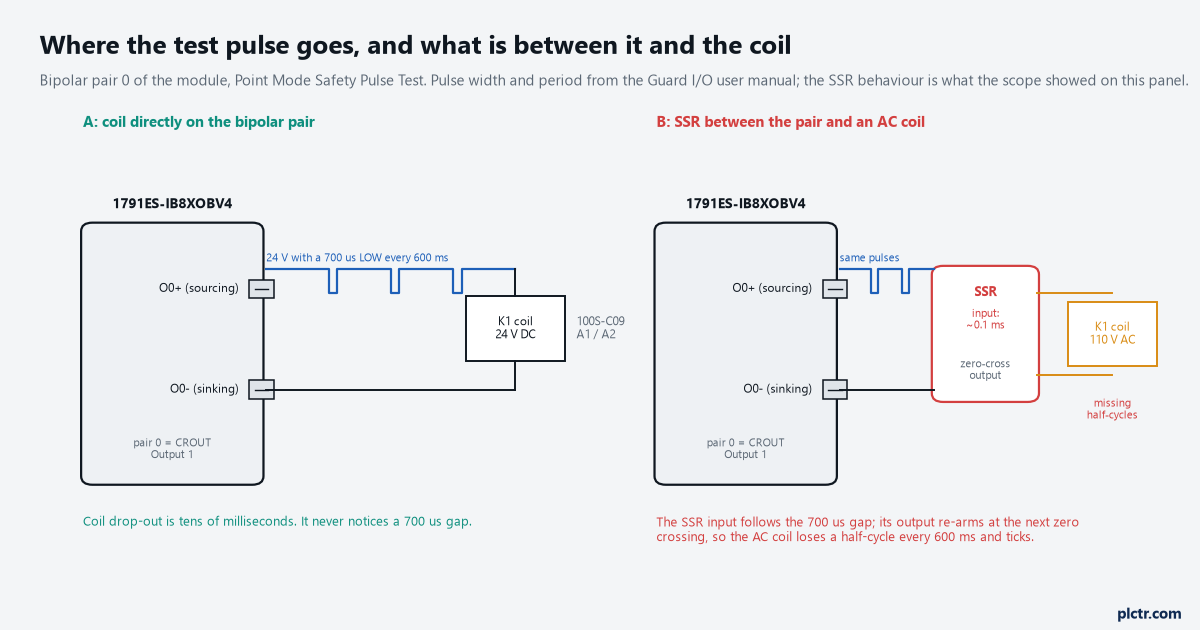
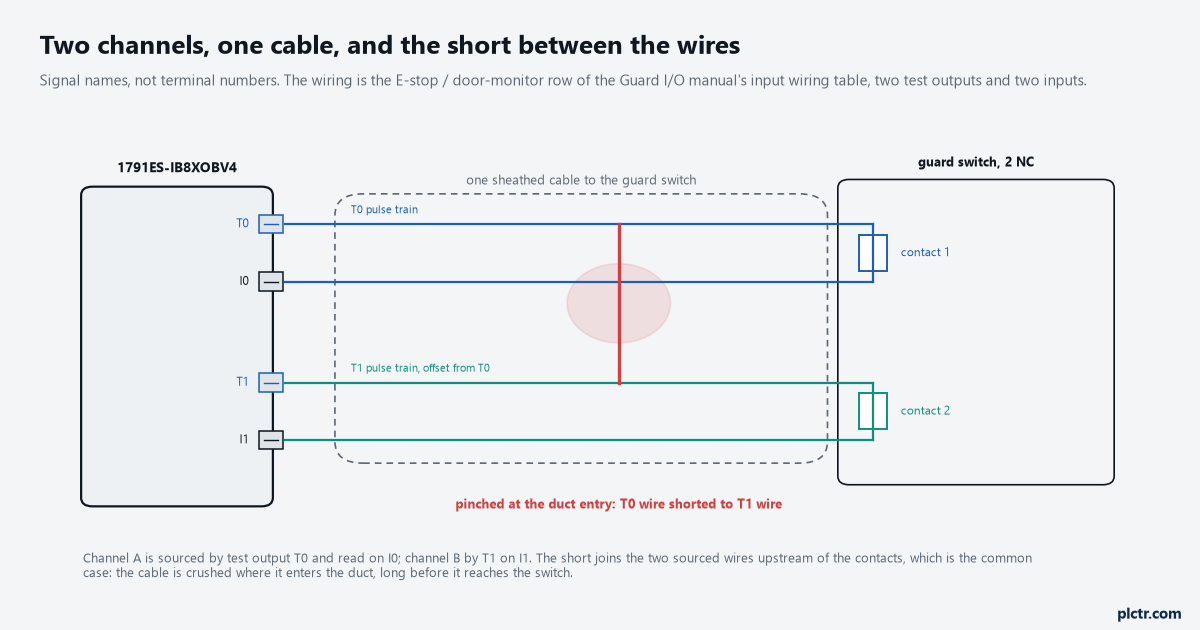
Inputs I0 and I1 on a 1791ES-IB8XOBV4 went solid red one afternoon with the guard closed, and the DCS instruction in the GuardLogix 5580 behind them has held Input Status false ever since. The guard switch on the infeed has two NC contacts in one four-core cable, the cable was crushed where it enters the … Read more

Connecting a Python OPC UA Client to an S7-1500: Certificates, Security Policy and the Anonymous Login That Fails

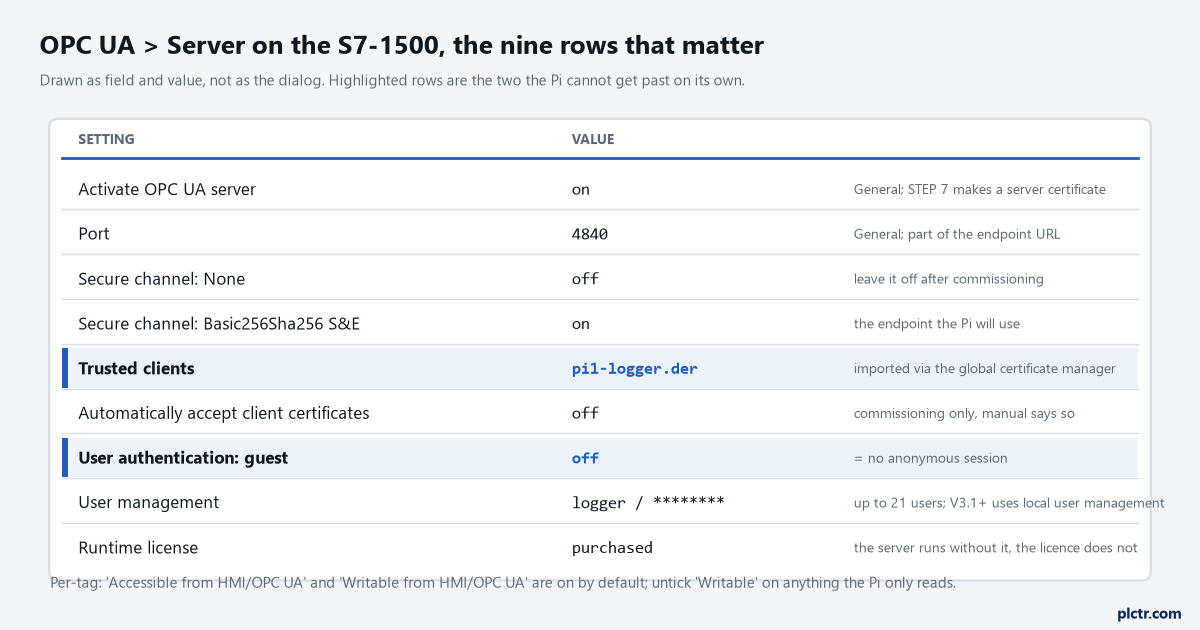
The CPU's OPC UA server settings drawn as field and value: server on, port 4840, None off, Basic256Sha256 Sign and Encrypt on, trusted clients pi1-logger.der, automatic accept off, guest off, user logger, runtime licence

BadIdentityTokenRejected is the answer an OPC UA server gives when the secure channel is up, the client certificate is trusted, and the session request arrives with no user in it, and on an S7-1500 with guest authentication off that is exactly where a first Python OPC UA client stops. It is the third of four … Read more

Powering a Raspberry Pi from Panel 24 VDC: The 1606 Supply, the Ride-Through and the Shutdown Signal

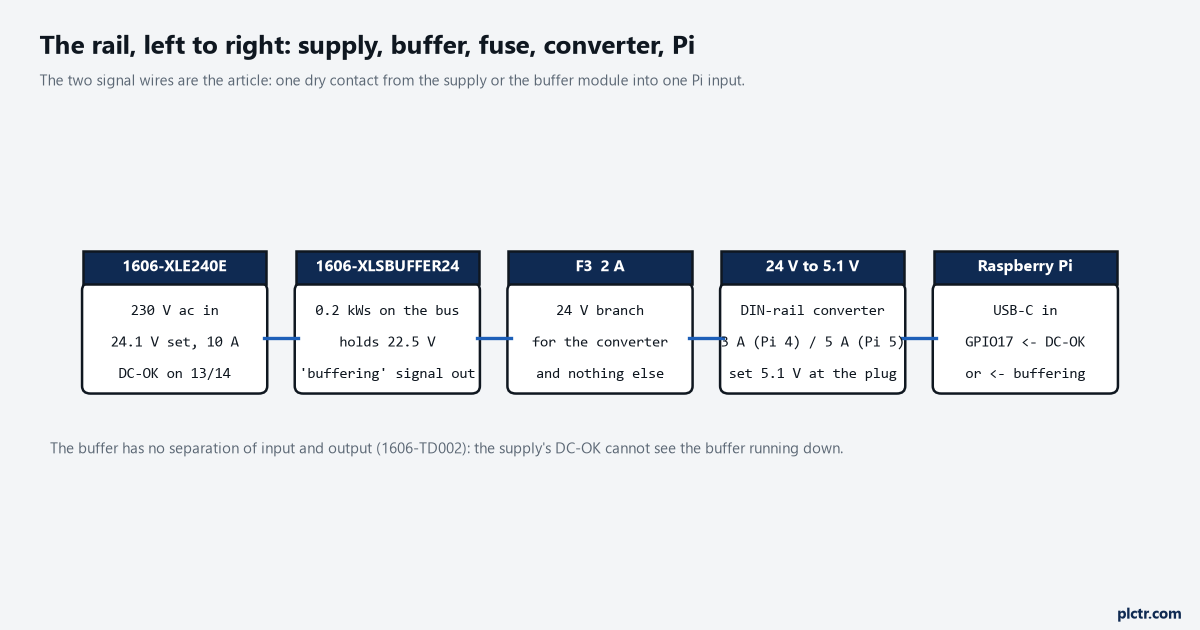
The DIN rail left to right: the 1606-XLE240E with DC-OK on 13/14, the 1606-XLSBUFFER24 on the same bus, a 2 A branch fuse, the 24 V to 5.1 V converter, and the Pi with GPIO17 fed from the contact

A 1606-XLE240E Series B has a DC-OK relay on terminals 13 and 14 that closes while the 24 V bus is above 90 % of its set point, and a Raspberry Pi 4 needs 5.1 V and somewhere between five and twenty seconds of notice to halt without corrupting its card. Raspberry Pi panel power … Read more

A Safety Reset That Is a Rising Edge, Not a Level: The One Rung That Stops an Automatic Restart

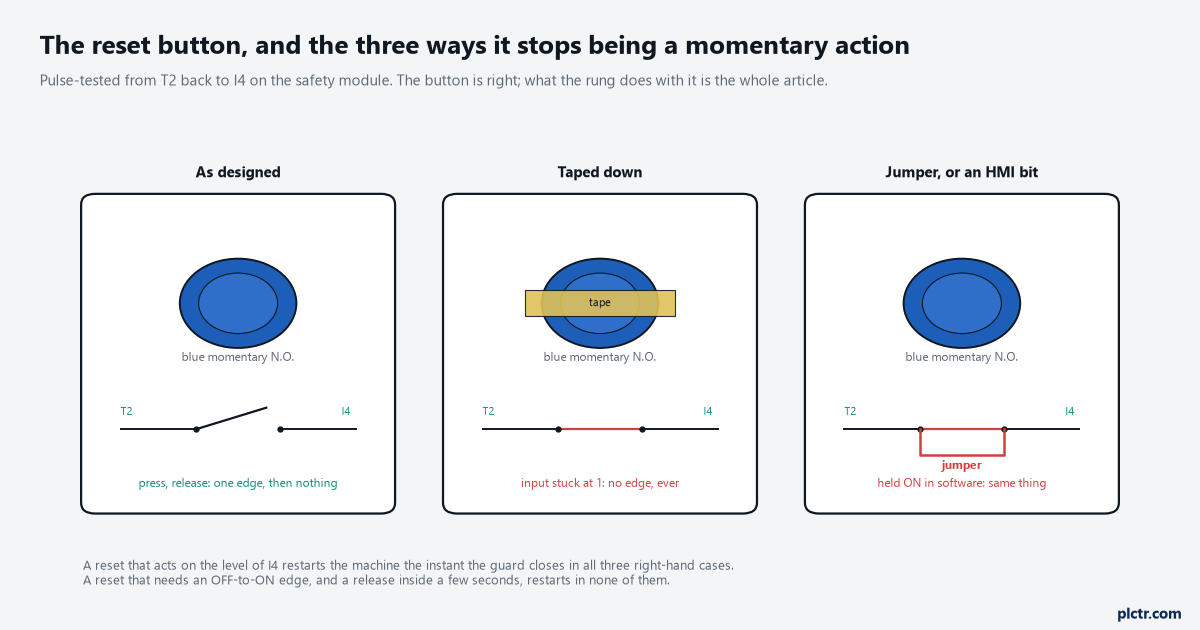
The reset station three ways: the blue momentary button wired from T2 to I4 as designed, the same button taped down, and a jumper or a held HMI bit across the contact

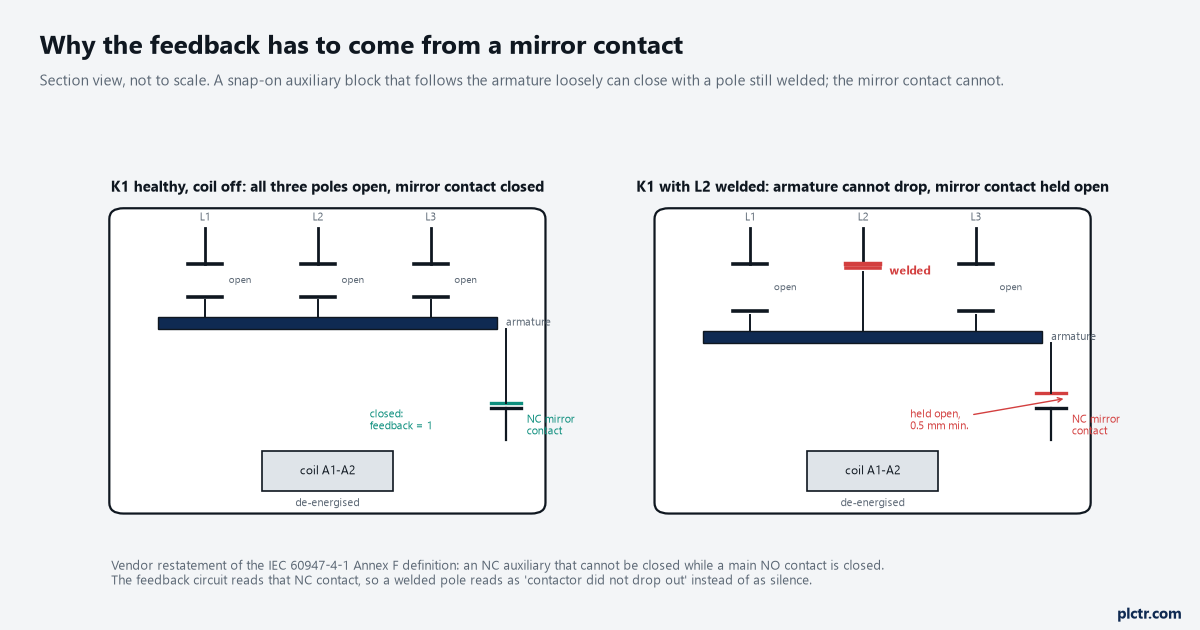
The guard on the case packer closed at 14:07 and the infeed conveyor started on its own, with the blue reset button 4 m away and nobody within reach of it. The DCS instruction on that gate was configured Restart Type Manual, exactly as the drawing said, and the machine still restarted, because the button … Read more

Reading a Logix Tag into Node-RED on a Raspberry Pi Without Writing Code

plc programming logix tag node red raspberry pi no code 1 plc

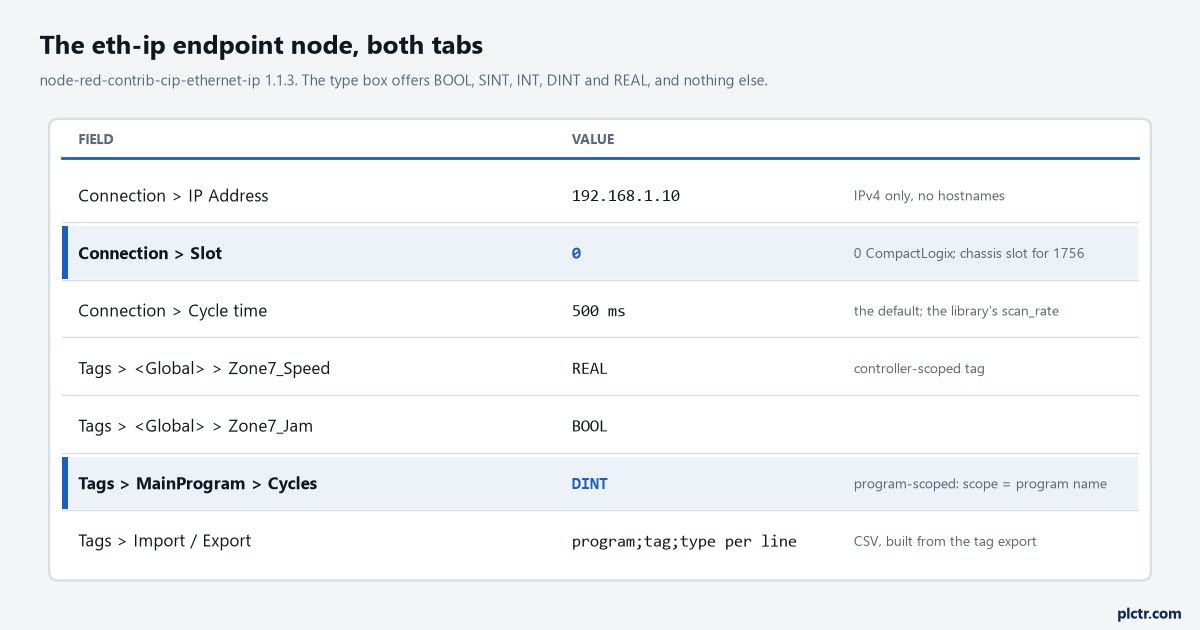
A Node-RED Logix tag read takes one install script, one palette install and two dialogs on a Raspberry Pi 4: Zone7_Speed from a 5069-L306ER appears in the debug sidebar as 30.0, and none of it involves typing a line of code. The node that does it is node-red-contrib-cip-ethernet-ip 1.1.3, installed from the palette manager, configured … Read more

Timestamping PLC Data on a Raspberry Pi: Which Clock Wins and Why Your Trend Repeats an Hour

plc programming plc data timestamps raspberry pi clocks repeated hour 1 plc

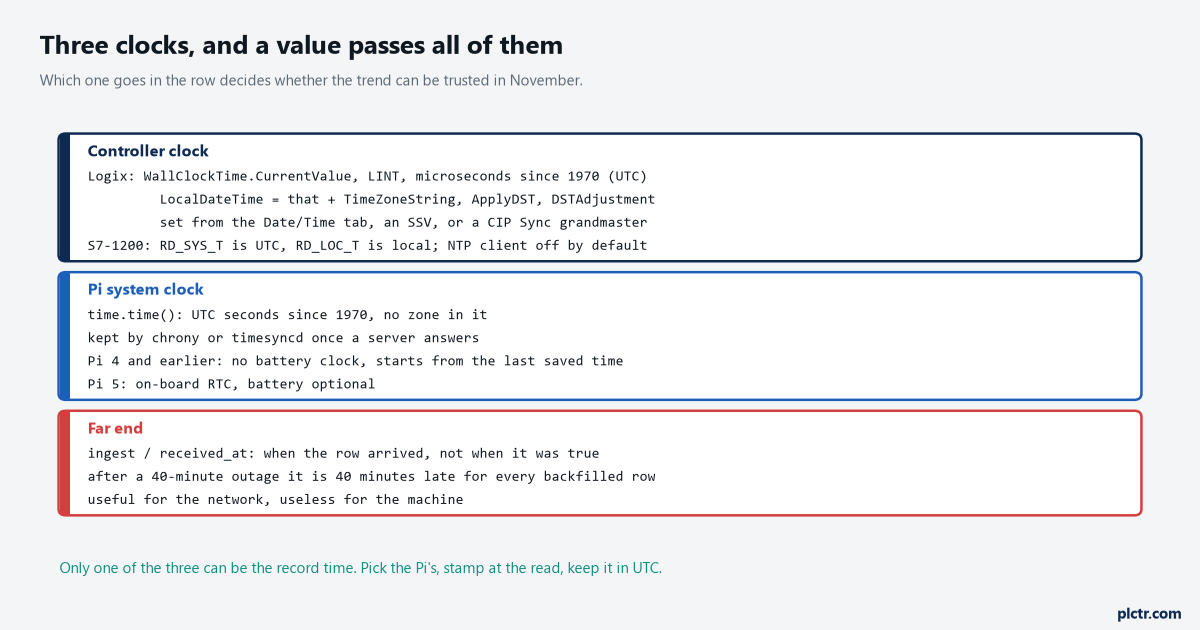
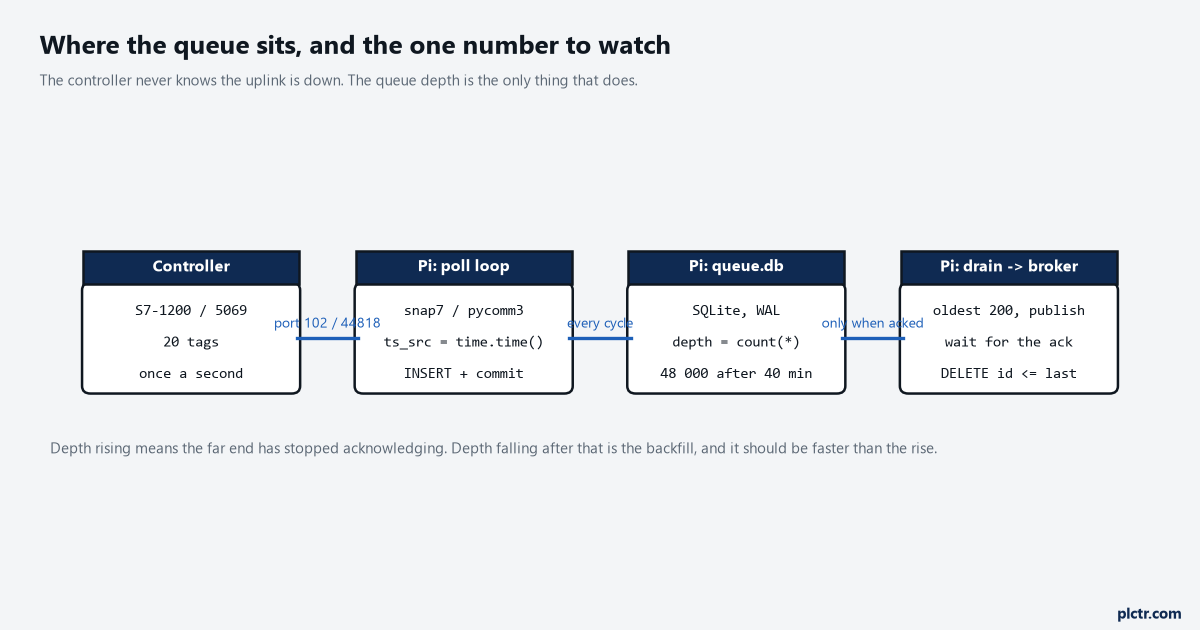
At 02:30 on Sunday 25 October 2026 a logger in Berlin writes a row, and sixty minutes later it writes another row stamped 02:30, and the trend viewer draws the second hour on top of the first. Meanwhile the controller it reads from keeps its own idea of the time as a LINT of microseconds … Read more

Advertisement