Sortation Verification: Proving the Carton Went Where the Logic Sent It
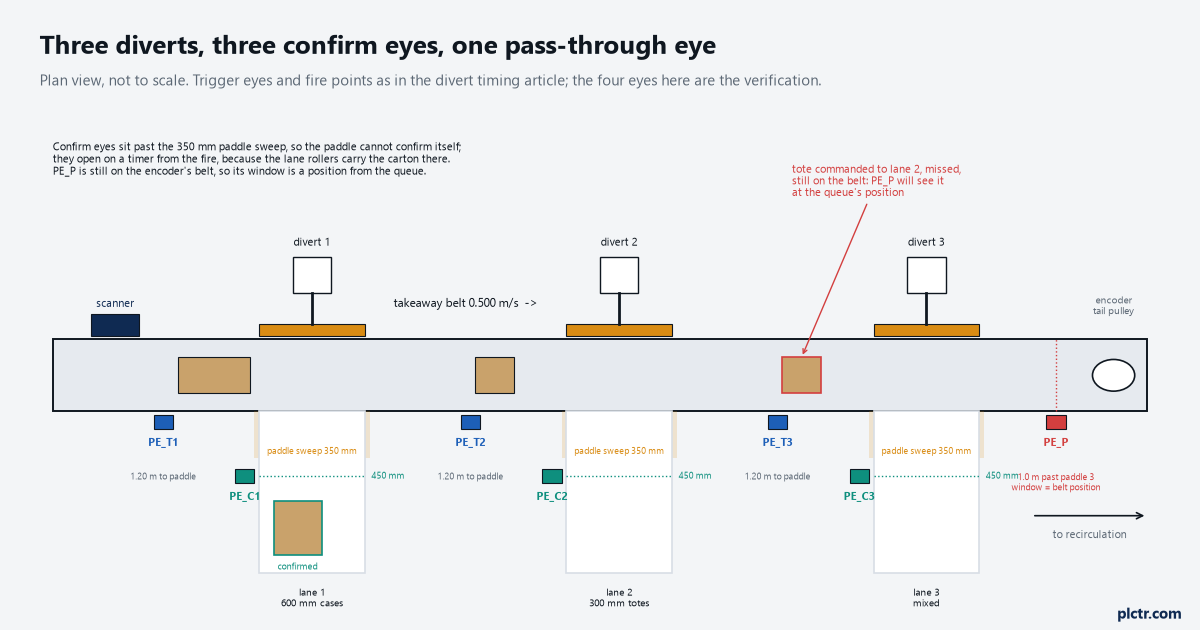
Sortation verification with a confirm eye past each divert: open a window per commanded divert, then count confirmed, missed and stray per lane.
Sortation verification with a confirm eye past each divert: open a window per commanded divert, then count confirmed, missed and stray per lane.
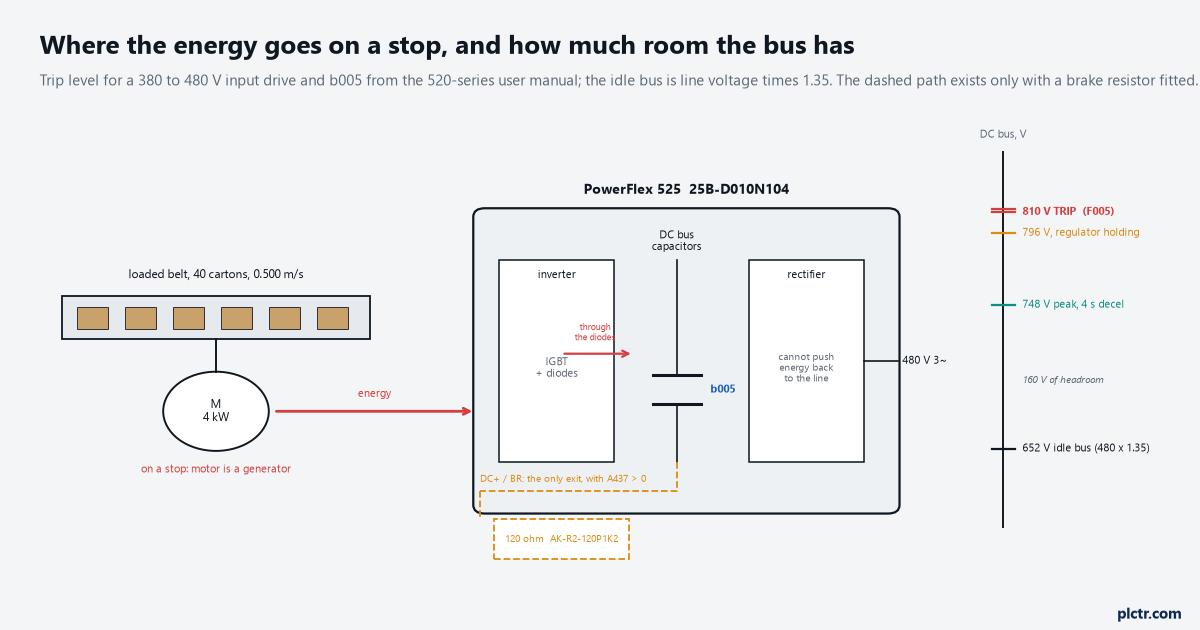
A loaded conveyor trips F005 on every stop: what PowerFlex 525 decel time, A550, P045 and the DB resistor each do to the DC bus, with b005 trended.
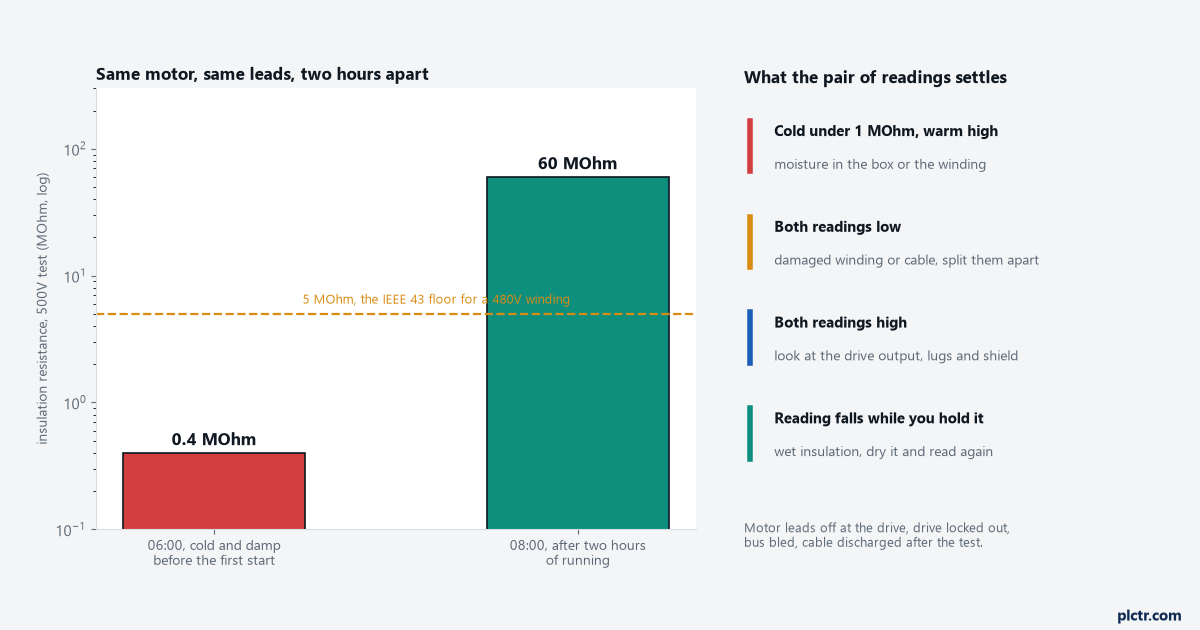
F013 is current leaving the motor circuit for earth. A megger routine that separates motor, cable and junction box, with the readings that decide it.
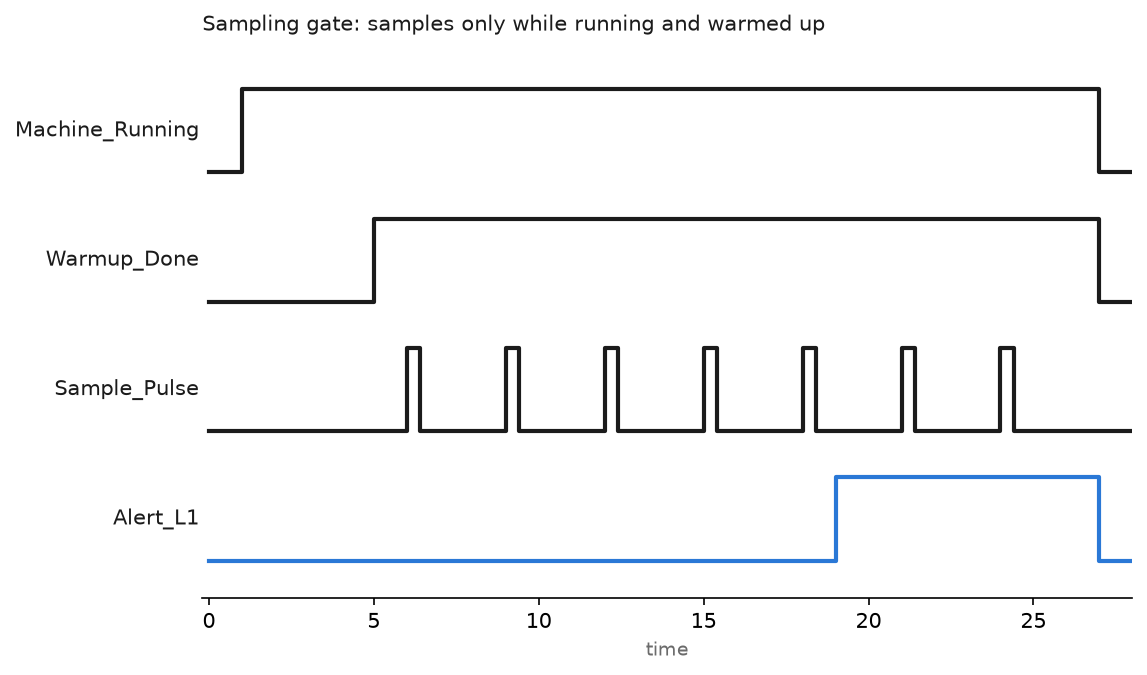
Build PLC predictive maintenance on hardware you own: vibration and motor current inputs, runtime hours, moving averages, baselines and alarm levels.
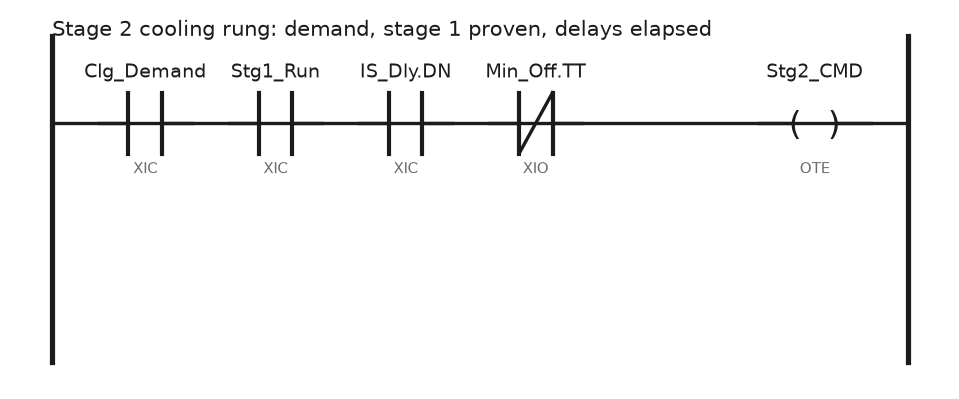
PLC building automation that a stranger can maintain: naming, sequences of operation in the code, staging, BACnet mapping, trends, alarms and overrides.
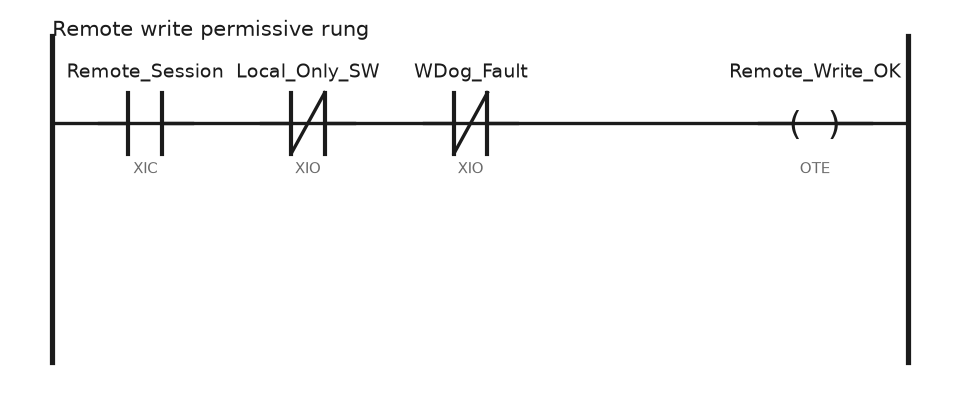
Remote access to a PLC that security will sign off: outbound VPN routers, read-only web HMI, an access rights table, a permissive rung and an audit trail.
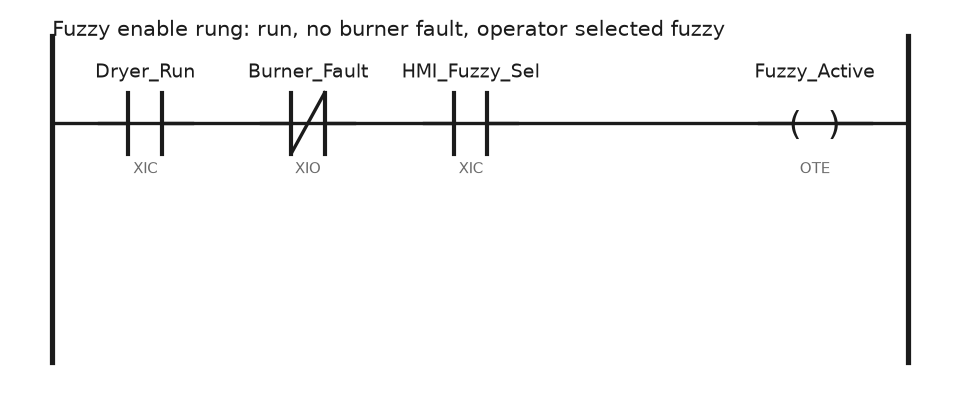
Where fuzzy control beats PID, how to hand-code memberships, a 3×3 rule table and weighted-average defuzzification in Logix ST, with a dryer example.
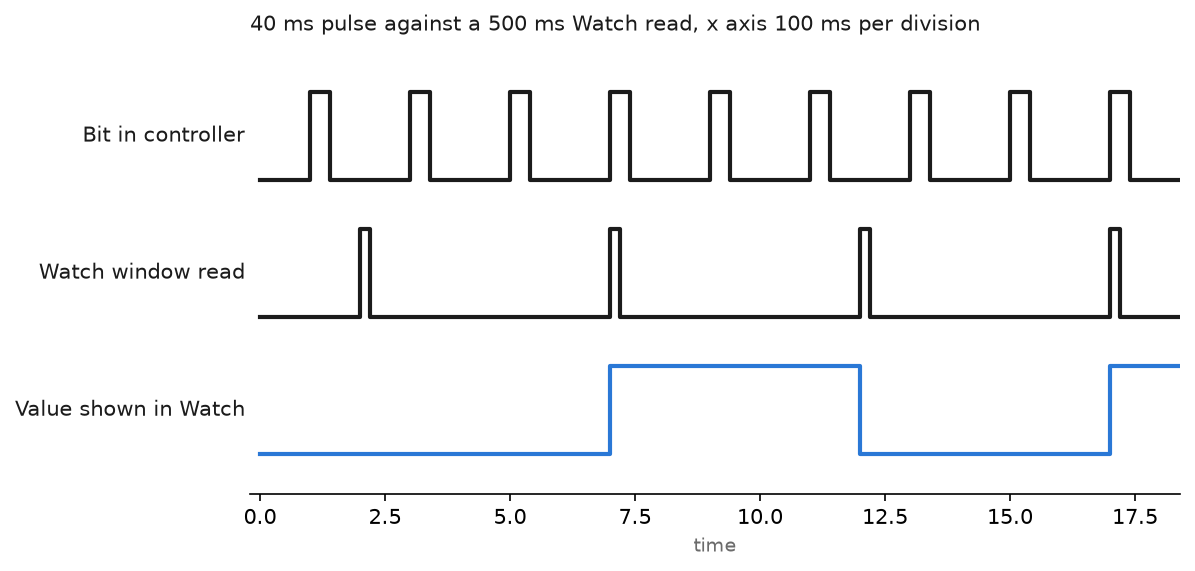
Build watch lists in the Studio 5000 Watch window, monitor and write tag values online, and know when the sample rate hides what you are chasing.
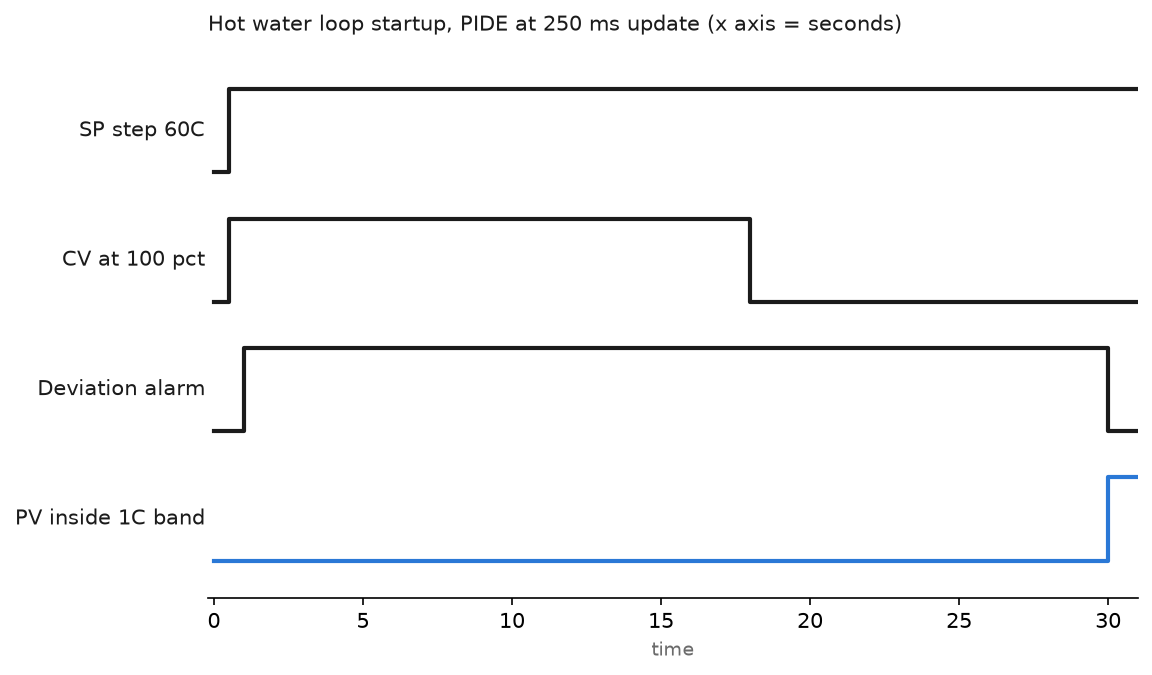
Scale the analog signals, pick PID or PIDE, put the loop in a periodic task, then tune from a bump test. Siemens PID_Compact covered as well.

Practical PLC troubleshooting methods: reading diagnostic LEDs and fault codes, adding counters to trace program flow, and using trend graphs.

Building a PLC trend chart in Studio 5000: set the sampling period, add the tags, and fix the X and Y axis ranges so the curve stays readable.
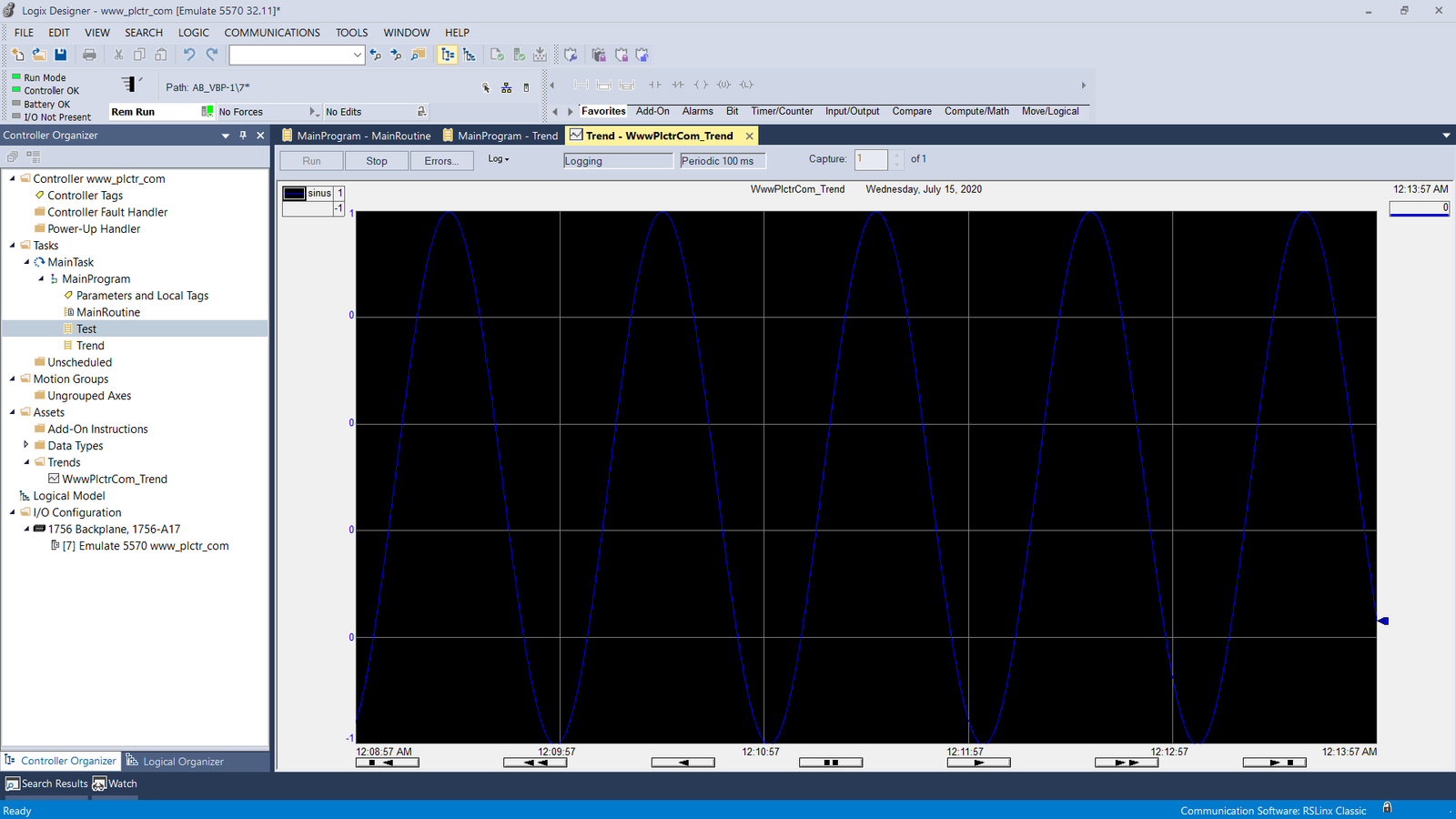
What a PLC trend page is good for: watching analog and digital tags over time, finding the fault faster, and keeping the history for a report.