Alias Tags in Studio 5000: When They Help and When They Hide the Problem
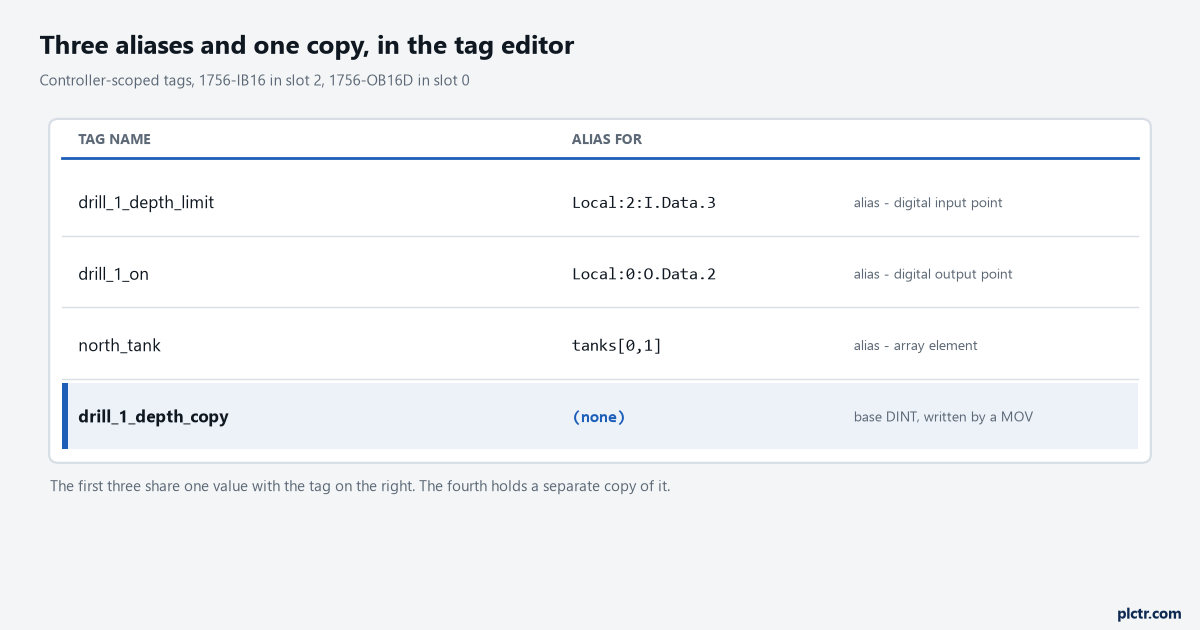
What a Studio 5000 alias tag shares with its base, how it changes a force and a cross reference, and the tag scheme an alias cannot fix on a 1756-IB16.
What a Studio 5000 alias tag shares with its base, how it changes a force and a cross reference, and the tag scheme an alias cannot fix on a 1756-IB16.
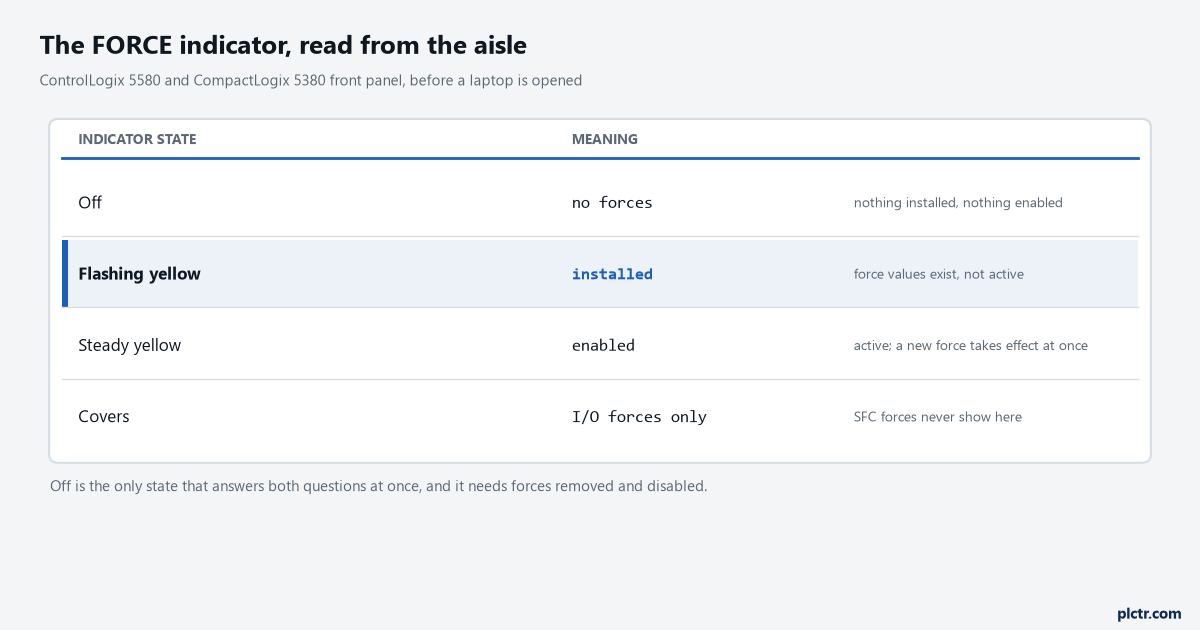
Install a force on a 1756-L83E, enable it, then prove it is gone: the three FORCE indicator states, the GSV that reads force status, Remove vs Disable.
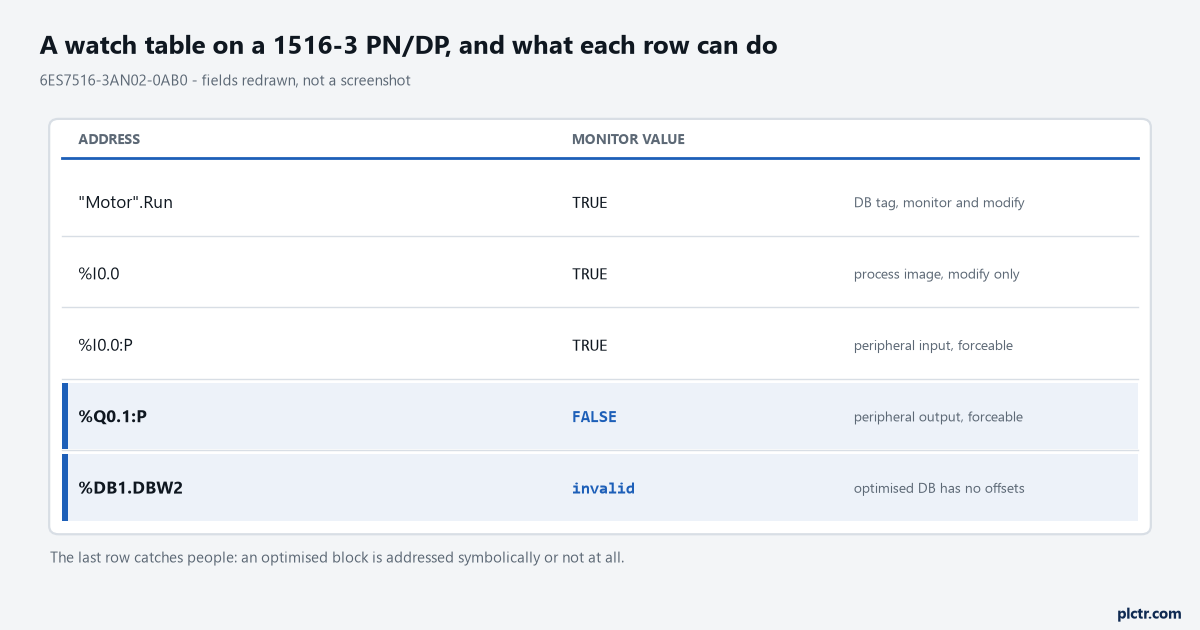
Monitor a block on an S7-1500, build a watch table, and work out why a value sits there: modify against force, optimised blocks, and what STOP does.
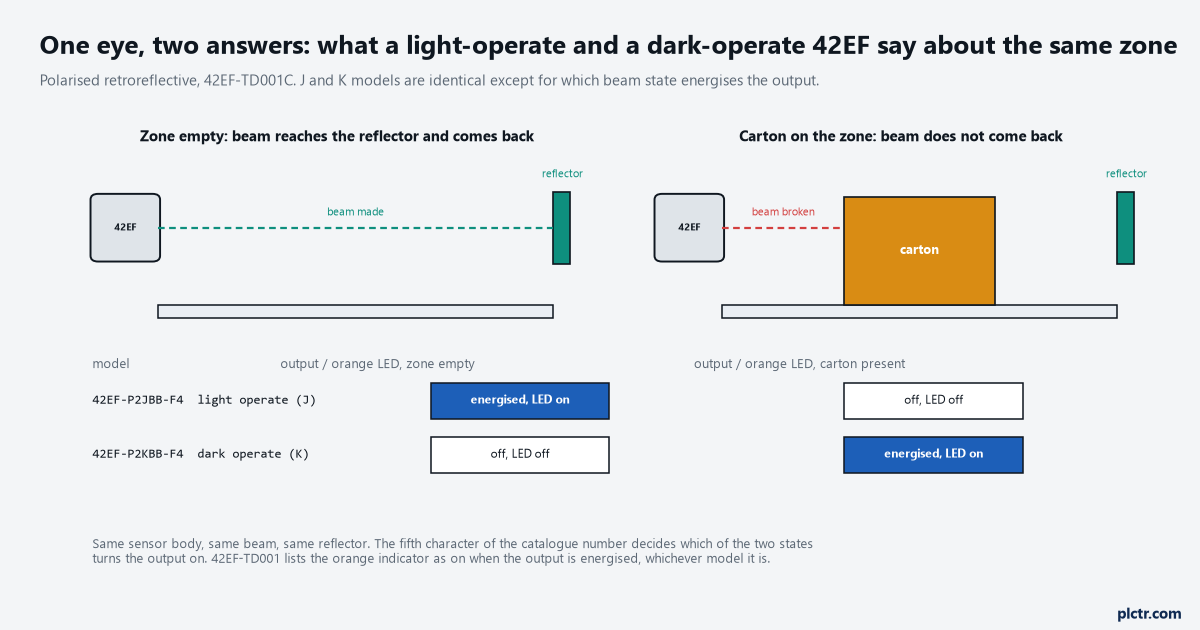
Zone 6’s eye came out of stores as a 42EF-P2KBB-F4, went onto the bracket in place of a 42EF-P2JBB-F4, and from the next 600 mm carton on, zone 6 reported occupied while it was empty and empty while a carton stood on it. One letter in the fifth position of the catalogue number, K for … Read more
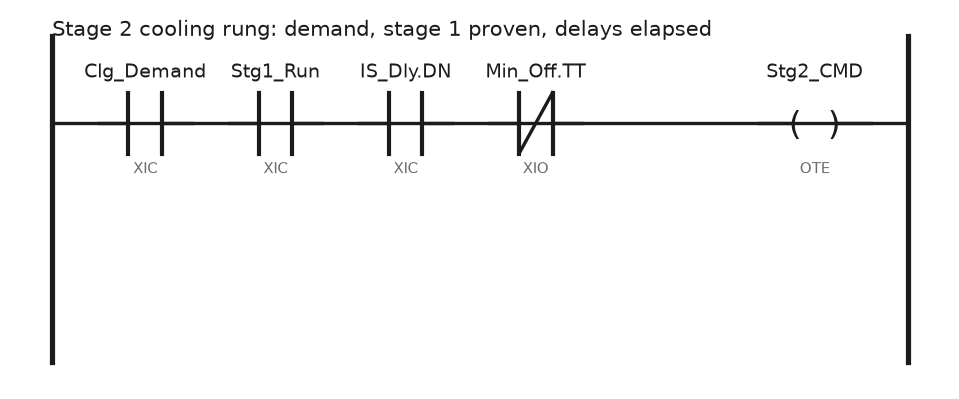
PLC building automation that a stranger can maintain: naming, sequences of operation in the code, staging, BACnet mapping, trends, alarms and overrides.
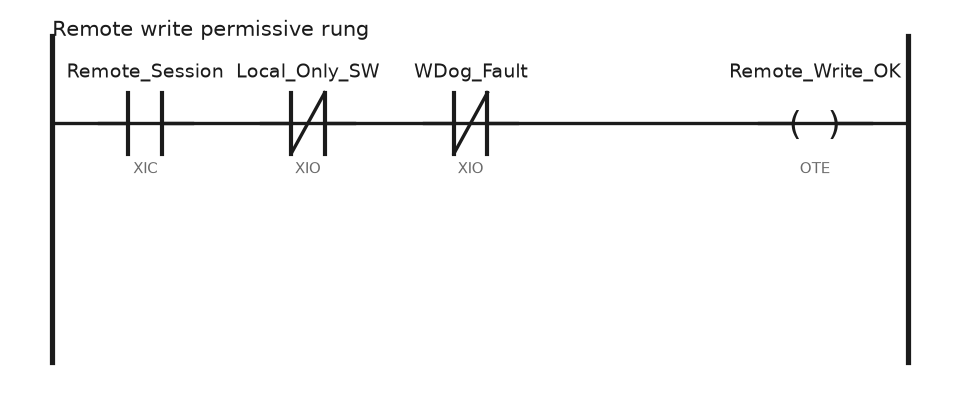
Remote access to a PLC that security will sign off: outbound VPN routers, read-only web HMI, an access rights table, a permissive rung and an audit trail.
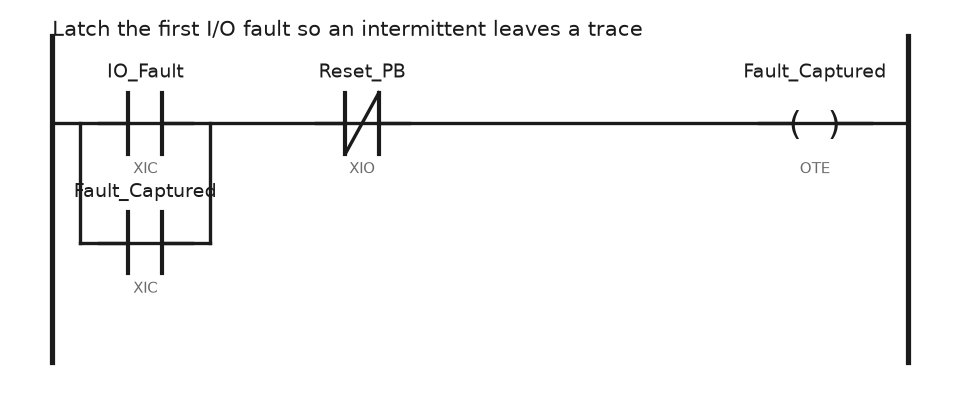
A repeatable PLC troubleshooting order: module LEDs, controller major faults, I/O connection status, forces, cross-reference, trends and Ethernet checks.
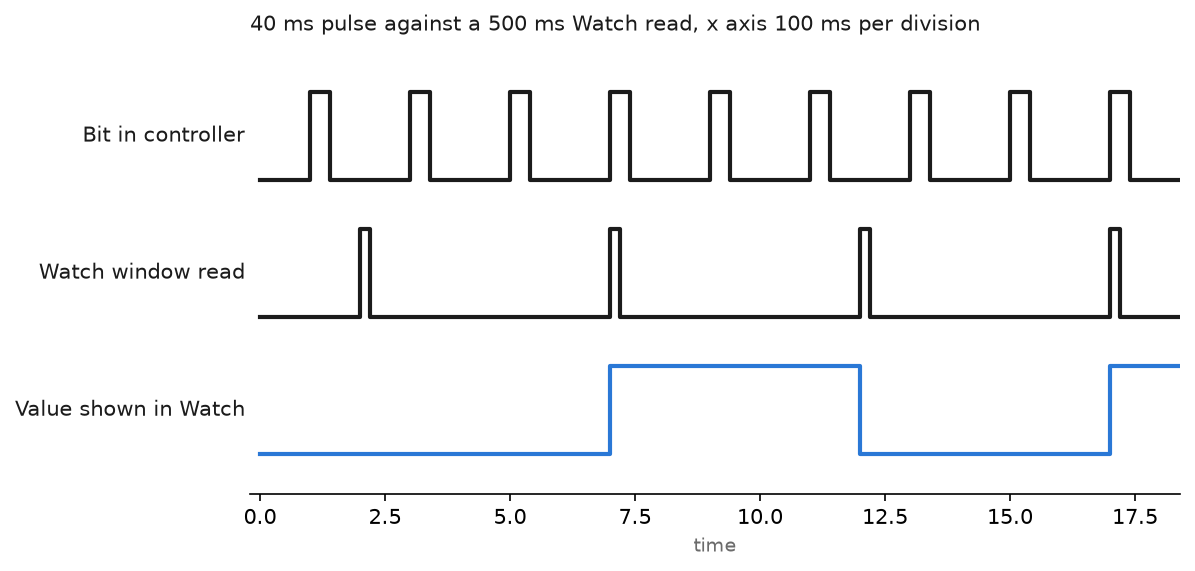
Build watch lists in the Studio 5000 Watch window, monitor and write tag values online, and know when the sample rate hides what you are chasing.
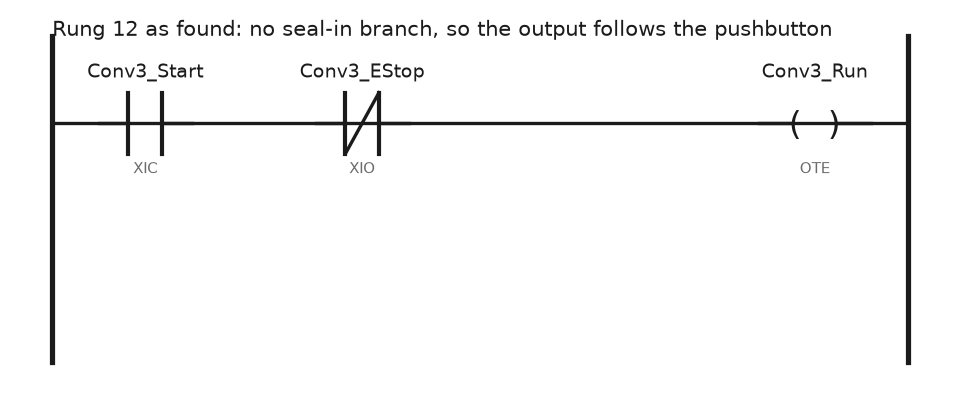
A rung by rung ControlLogix ladder troubleshooting method: read the highlighting, use cross reference and search, find double coils, read the fault record.