Create Controller Fault Routine
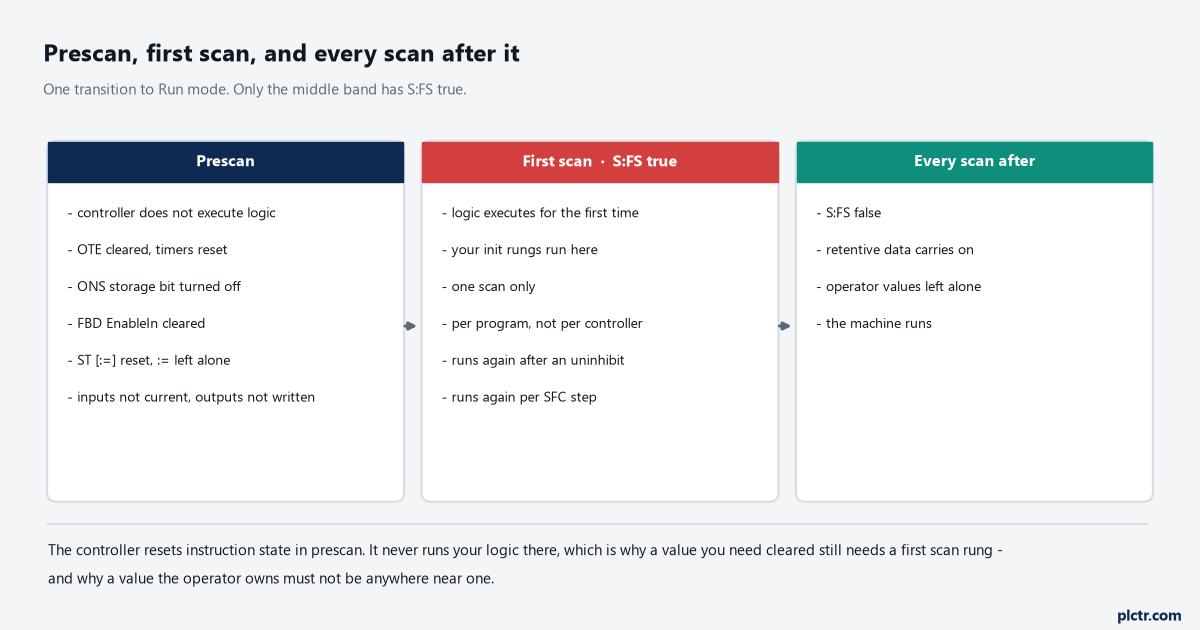
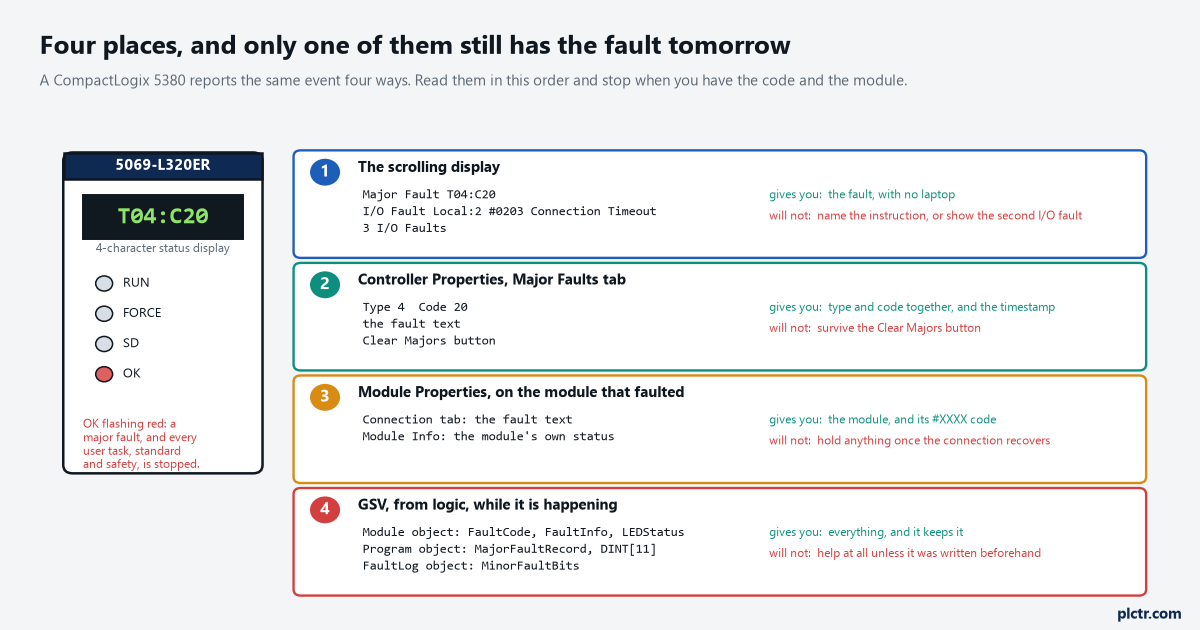
How to check for a specific fault type and code, clear it with SSV, and handle faults during prescan in a Logix controller fault routine.
Logix Designer, RSLogix 500/5000, RSLinx, FactoryTalk and the faults you meet on a ControlLogix or CompactLogix line.
How to check for a specific fault type and code, clear it with SSV, and handle faults during prescan in a Logix controller fault routine.
How to install RSLogix 500 Emulate, configure the SLC 500 (DH485) driver in RSLinx, and open and run an RSS program on the virtual PLC.
How to fix the FactoryTalk Activation Manager error by restarting the Activation Helper service through Windows Administrative Tools.
Covers the most common DeviceNet network problems: missing termination resistors, incorrect grounding, and undersized or multiple power supplies.
How to configure the USB driver in RSLinx and connect a workstation to a ControlLogix controller’s USB port to upgrade firmware or download programs.
FTView SE and Factorytalk Site client edition usage and Factorytalk Network Distributed or Network Station applications, how you can reach to FTView Server and some tricks.
Steps to import an Add-On Instruction exported from another Logix Designer project so you can reuse it in your current controller program.
Full walkthrough for creating an Add-On Instruction in Logix Designer, defining parameters, external access, and using it in a motor control example.
Explains how safety Add-On Instructions differ from standard ones in GuardLogix, including ladder-only logic, safety signatures, and locking rules.
Explains how Add-On Instructions let you reuse logic across projects, protect source code, and apply FactoryTalk Security permission sets.
How to open the Logix Designer Tag Editor from Controller Tags or Parameters and Local Tags, and what you can create, filter, and modify there.
DeviceNet scanner IDLE mode issue Causes/Solutions, idle mode description and devicenet error code. When DeviceNet scanner shows IDLE, it means the scanner card isn’t executing the outputs. But still continue to read the inputs.